
How To Select The Right Water Purity For Your Lab Applications
12 Jun 2026
Pure Water Is Used Almost Everywhere In The Lab
Water is used almost everywhere in the lab, from being a key reagent in your day-to-day experiments, tests, and assays, to performing those "behind the scenes" functions like autoclaving, glassware cleaning, media preparation, and water bath setup. But not all lab water is created equal. Different techniques demand different levels of purity, and using the wrong grade can introduce ions, organics, or microbial contaminants that bias results, damage instruments, or invalidate an entire run.
Most lab water falls into three grades defined by ASTM D1193 and ISO 3696. Type I (ultrapure) water is required for the most sensitive applications (HPLC, UHPLC, LC-MS, GC-MS, ICP-MS, ICP-OES, atomic absorption spectroscopy, cell and tissue culture, PCR, qPCR, and next-generation sequencing) where trace contaminants would interfere with detection or biological activity. Type II (pure) water is the right choice for buffer preparation, ELISA and immunochemistry workflows, microbiology, electrochemistry, and spectrophotometry. Type III (RO) water is sufficient for glassware washing, autoclave feed, and media prep, and is also commonly used as feedwater for Type I polishing systems. Clinical chemistry analyzers require CLRW-grade water.
Knowing exactly which type of water purity your particular application requires can take time to go away and research — time that could be better spent at the bench. To help you make the most of your valuable time, we've assembled this quick reference table enabling you to easily match your application with the required water quality.
And for more information about the different types of water, check out this guide here too.
Check Out Our Quick Reference Guide To Match Your Laboratory Application And Water Purity
Technique | Application sensitivity required | Resistivity (MΩ-cm)* | TOC (ppb) | Filter (μm) | Bacteria (CFU/ml) | Endotoxins (EU/ml) | Nucleases | Water grade | Water type |
Feed to still | Low | >0.05 | <500 | NA | NA | NA | NA | Primary | III |
Feed to ultra pure water system | General | >0.05 | <50 | NA | NA | NA | NA | Primary | II+ |
High | >1 | <10 | <0.2 | <1 | NA | NA | Ultra pure | I | |
General chemistry | General | >1 | <50 | <0.2 | <10 | NA | NA | General lab | II+ |
Glassware washing | General | >1 | <50 | <0.2 | <10 | NA | NA | General lab | II+ |
High | >18 | <10 | <0.2 | <1 | NA | NA | Ultra pure | I | |
Media preparation | General | >1 | <50 | <0.2 | <1 | NA | NA | General lab | II+ |
Solution preparation and dilutions | General | >1 | <50 | <0.2 | <1 | NA | NA | General lab | II+ |
High | >18 | <10 | <0.2 | <1 | NA | NA | Ultra pure | I | |
Steam generation | General | >1 | <50 | <0.2 | <1 | NA | NA | General lab | I |
Bacterial cell culture | General | >1 | <50 | <0.2 | <1 | NA | NA | General lab | I |
Clinical biochemistry | USP/EP | >2 | <500 | <0.2 | <1 | NA | NA | General lab | I |
CLSI | >10 | <500 | <0.2 | <1 | NA | NA | General lab | I | |
Electrophoresis | High | >18 | <10 | UF | <1 | <0.005 | ND | Apyrogenic Ultra pure | I |
Electrophysiology | General | >1 | <50 | <0.2 | <1 | NA | NA | General lab | I |
ELISA | General | >1 | <50 | <0.2 | <1 | NA | NA | General lab | I |
Endotoxin analysis | Standard | >1 | <50 | <0.2 | <1 | <0.05 | NA | Apyrogenic General lab | I |
High | >18 | <10 | UF | <1 | <0.002 | ND | Apyrogenic Ultra pure | I | |
Histology | General | >1 | <50 | <0.2 | <1 | NA | NA | General lab | I |
Hydroponics | General | >1 | <50 | <0.2 | <1 | NA | NA | General lab | I |
Immunocytochemistry | High | >18 | <10 | UF | <1 | <0.002 | ND | Apyrogenic Ultra pure | I |
Mammalian cell culture | High | >18 | <10 | UF | <1 | <0.002 | ND | Apyrogenic Ultra pure | I |
Microbiological analysis | General | >1 | <50 | <0.2 | <1 | NA | NA | General lab | I |
Molecular biology | High | >18 | <10 | UF | <1 | <0.002 | ND | Apyrogenic Ultra pure | I |
Monoclonal antibody research | General | >1 | <50 | <0.2 | <1 | NA | NA | General lab | I |
High | >18 | <10 | UF | <1 | <0.002 | ND | Ultra pure | I | |
Plant tissue culture | High | >18 | <10 | UF | <1 | <0.002 | ND | Apyrogenic Ultra pure | I |
Radioimmunoassay | General | >1 | <50 | <0.2 | <1 | NA | NA | General lab | I |
Electrochemistry | General | >5 | <50 | <0.2 | NA | NA | NA | General lab | II |
High | >18 | <10 | <0.2 | <1 | NA | NA | Ultra pure | I | |
Flame-AAS | General | >5 | <500 | <0.2 | NA | NA | NA | General lab | II |
GC-MS | High | >18 | <3 | <0.2 | <1 | NA | NA | Ultra pure | I |
GF-AAS | High | 18.2 | <10 | <0.2 | <10 | NA | NA | Ultra pure | I+ |
HPLC | General | >1 | <50 | <0.2 | <1 | NA | NA | General lab | I |
High | >18 | <3 | <0.2 | <1 | NA | NA | Ultra pure | I | |
ICP-AES | General | >5 | <50 | <0.2 | NA | NA | NA | General lab | II |
High | >18 | <10 | <0.2 | <1 | NA | NA | Ultrapure | I | |
ICP-MS | General | >10 | <50 | <0.2 | <10 | NA | NA | General lab | II+ |
High | 18.2 | <10 | <0.2 | <1 | NA | NA | Ultra pure | I | |
Ion chromatography | General | >5 | <50 | <0.2 | <10 | NA | NA | General lab | II+ |
High | 18.2 | <10 | <0.2 | <1 | NA | NA | Ultrapure | I | |
Solid phase extraction | General | >1 | <50 | <0.2 | <10 | NA | NA | General lab | II+ |
High | >18 | <3 | <0.2 | <1 | NA | NA | Ultra pure | I | |
Spectrophotometry | General | >1 | <50 | <0.2 | <10 | NA | NA | General lab | II+ |
High | >18 | <10 | <0.2 | <1 | NA | NA | Ultra pure | I+ | |
TOC analsys | General | >1 | <50 | <0.2 | <10 | NA | NA | General lab | II+ |
High | >18 | <3 | <0.2 | <1 | NA | NA | Ultra pure | I+ | |
Trace metal detection | General | >5 | <50 | <0.2 | <10 | NA | NA | General lab | II+ |
High | 18.2 | <10 | <0.2 | <1 | NA | NA | Ultra pure | I+ |
Don’t see your application listed?
Contact a Lab Water Specialist at one of our Approved Business Partners for assistance - see below.
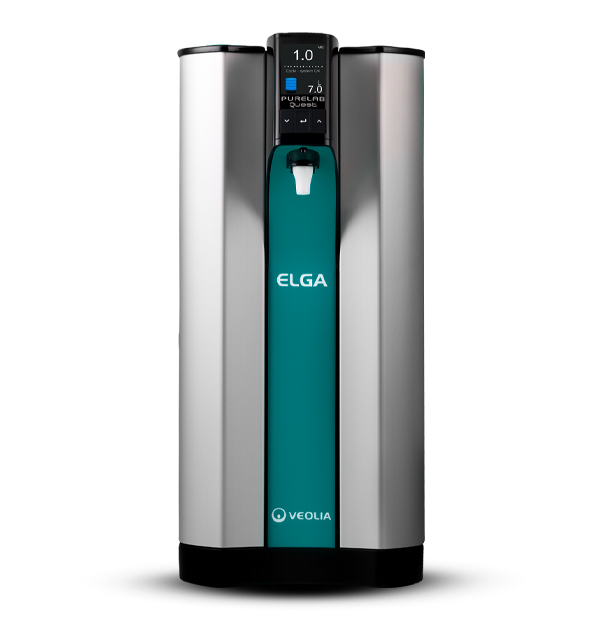
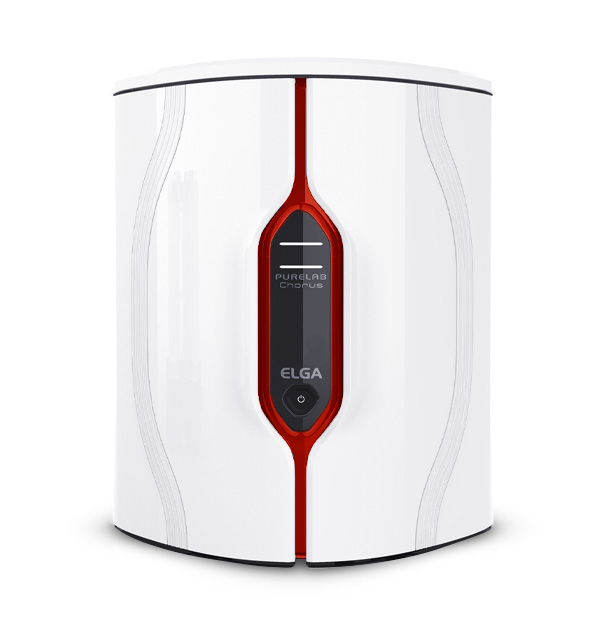
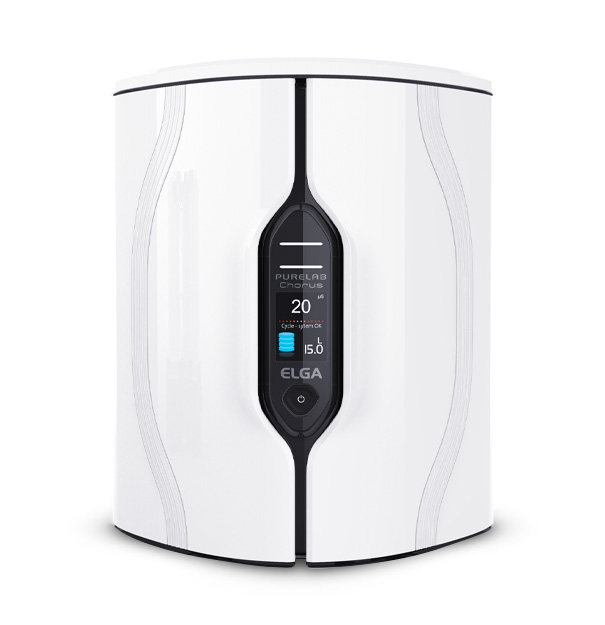
Find the right ELGA LabWater product for your application needs
FAQs
- What type of water do I need for HPLC?
HPLC requires Type I ultrapure water to avoid contaminant interference that can compromise separation and quantification. ELGA's ultrapure water meets 18.2 MΩ·cm resistivity at 25 °C, TOC <10 ppb, and bacterial counts <1 CFU/mL, ensuring the purity needed to protect chromatographic accuracy and reproducibility. PURELAB Chorus 1, flex, and Quest systems are designed for HPLC, LC-MS, and GC-MS workflows. Find the right water purification system for your application or speak to an expert.
- What water purity is required for cell and tissue culture?
Mammalian cell and tissue culture requires Type I ultrapure water with bacterial endotoxins below 0.03 EU/mL and undetectable levels of nucleases and proteases. Trace contaminants can inhibit cell growth, alter gene expression, and compromise reproducibility between passages. ELGA's ultrapure systems are designed for mammalian cell culture, protecting cell viability and experimental reproducibility from passage to passage. Find the right water purification system for your application or speak to an expert.
- What type of water should I use for PCR and molecular biology?
PCR and molecular biology applications typically require Type I ultrapure water free of nucleases, proteases, and endotoxins, since even trace contamination can degrade nucleic acids or inhibit amplification. ELGA's ultrapure water delivers 18.2 MΩ·cm resistivity at 25 °C, TOC <10 ppb, and undetectable levels of DNases and RNases. Find the right water purification system for your application or speak to an expert.
- Can I use Type II water instead of Type I?
Type II water is not a substitute for Type I in applications where trace contaminants affect results, such as HPLC, LC-MS, PCR, or cell culture. Using Type II water in place of Type I increases the risk of background interference, baseline drift, and compromised reproducibility. Type II is suitable for less sensitive applications, including buffer preparation, microbiological analysis, electrochemistry, and spectrophotometry.
- What happens if I use water that isn't pure enough for my application?
Using water below the required purity grade puts your results at risk. Contaminants can cause baseline drift, ghost peaks, failed reactions, impaired cell growth, and inconsistent data across runs, leading to wasted reagents, samples, consumables, and time. Matching water purity to the application is the simplest way to protect data integrity. Find the right water purification system for your application or speak to an expert.